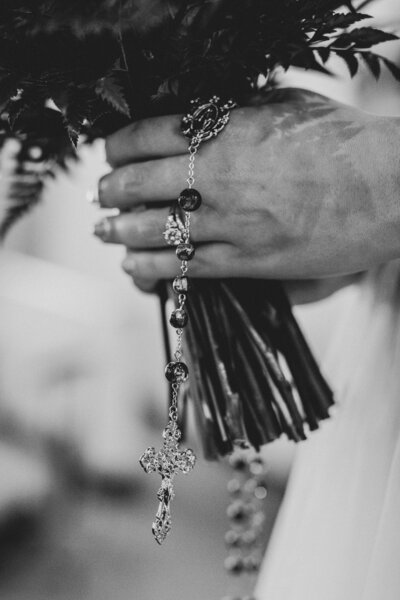
Have you ever stopped and wondered why a bride wears a veil on her wedding day?
Although there are some secular reasons for this, as Christians we believe veils represent purity, humility, and piety, especially in sacred spaces. So before you just choose a veil that matches your wedding dress, here are some additional reflections for choosing your veil:
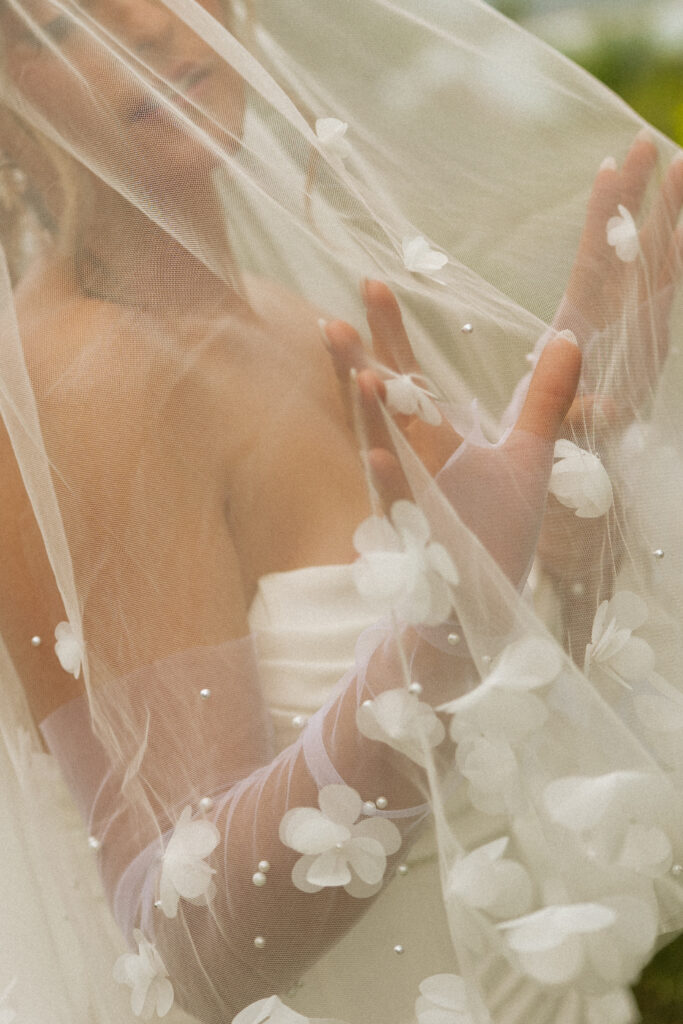
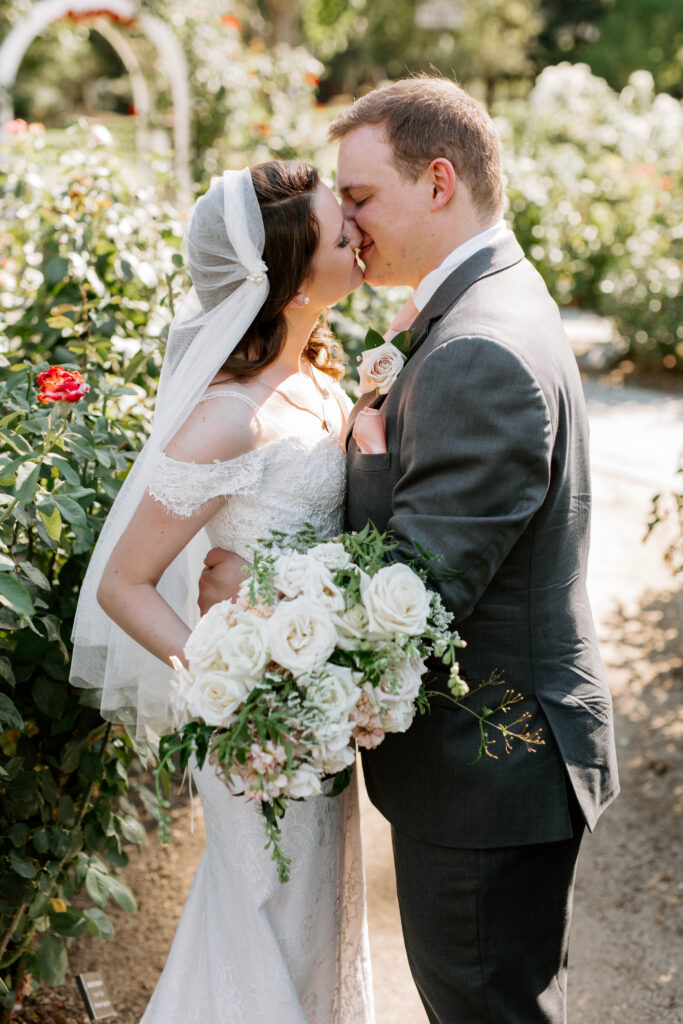
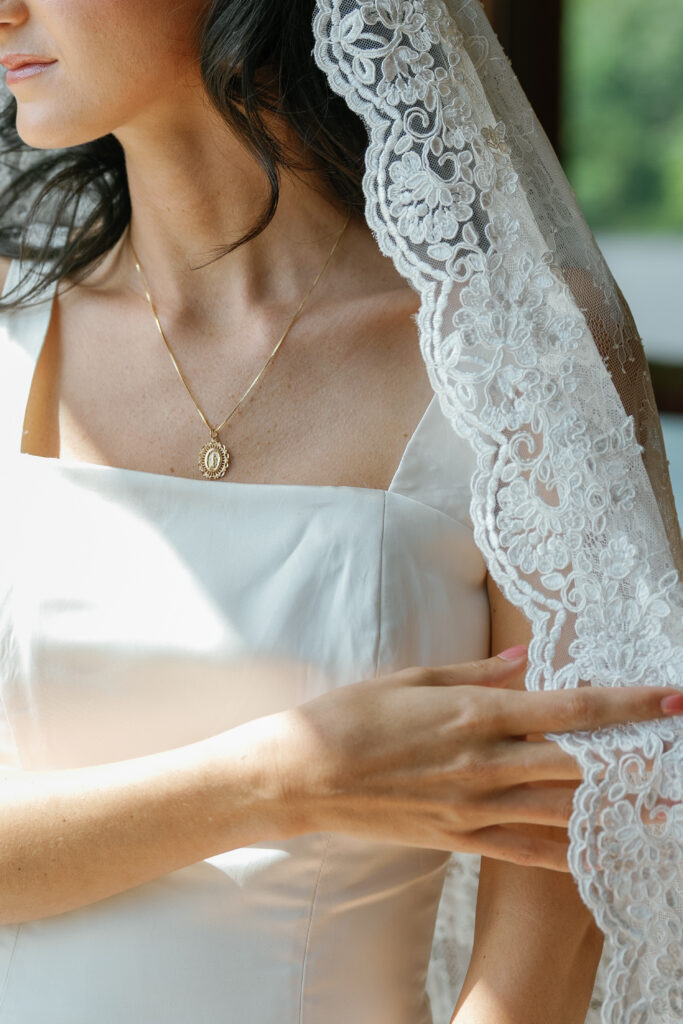
(from left to right) Photos by Anna Dzieciol Photography, Seraphima Studios, and Mystical Rose Photography
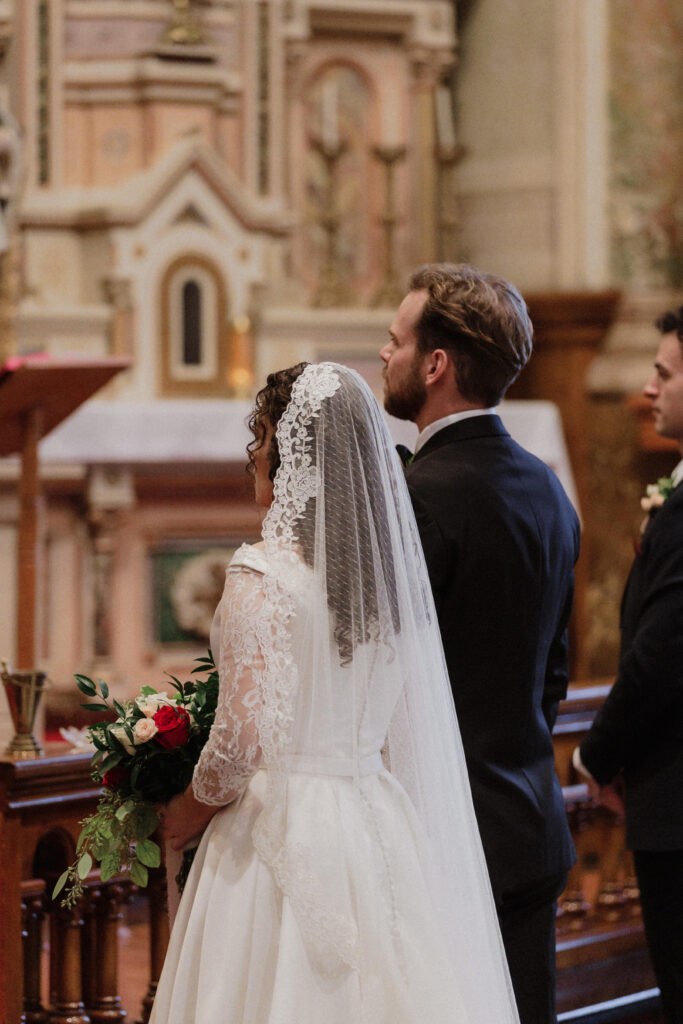
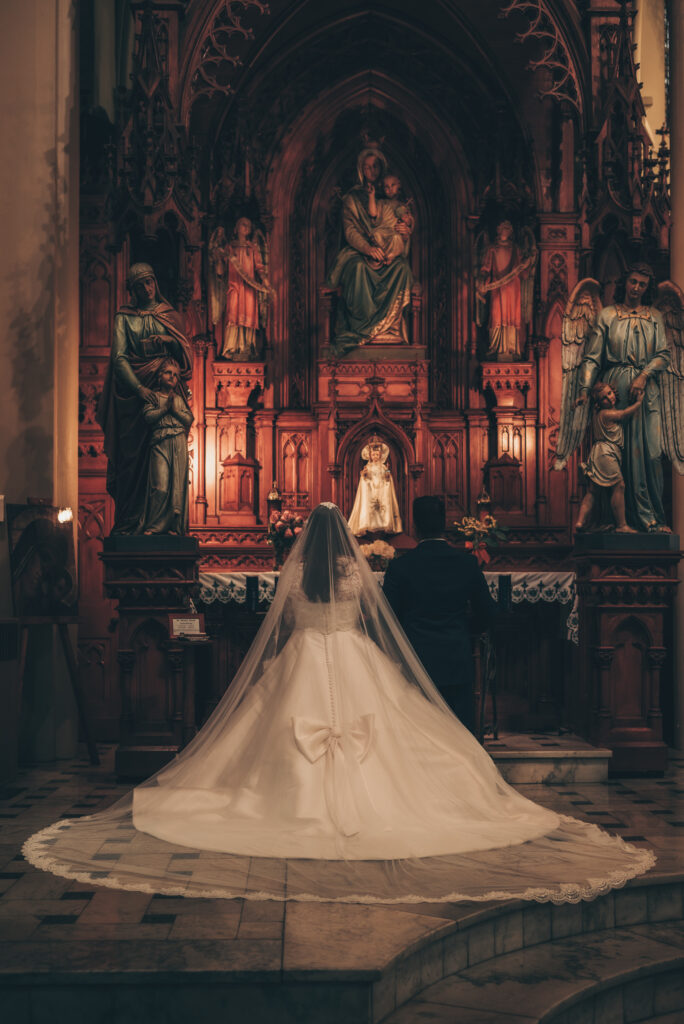
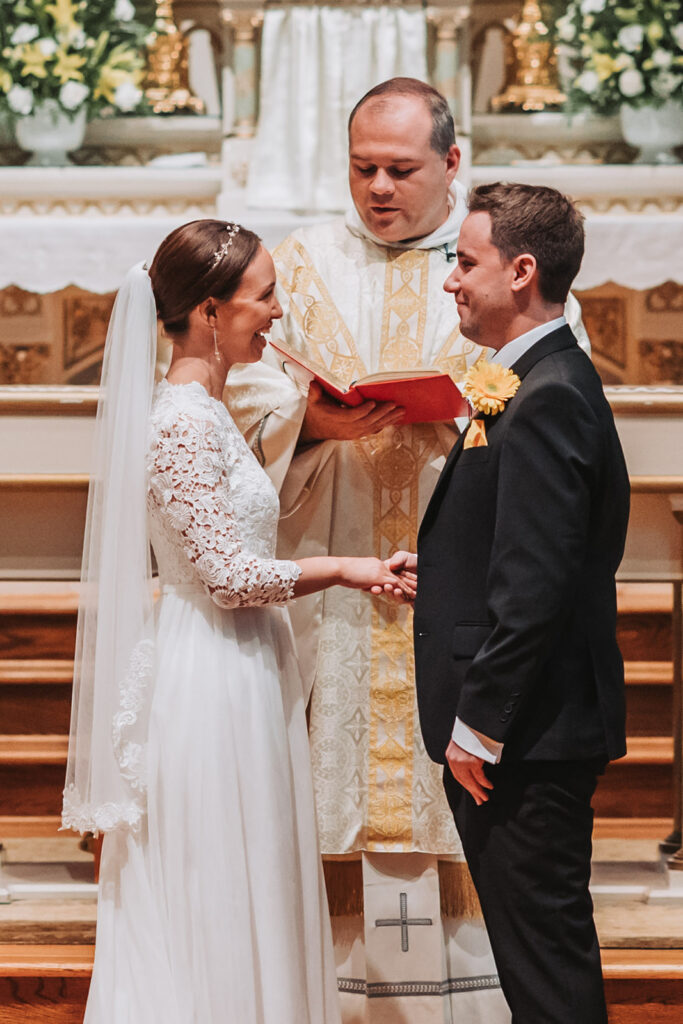
The Church’s History of Veils
Within the Catholic Church, it’s very common to see veils worn outside of a nuptial Mass or wedding ceremony. Veiling during Mass—or whenever in the presence of the Holy Eucharist—was common practice for all women pre-Vatican II. And although not mandatory today, it remains a voluntary act of piety, reverence, devotion to the sacredness of the True Presence. Even the color of Mass veils becomes a sign of personal devotion, with white being common for unmarried women, black representing the “dying of self” in marriage, blue showing a special devotion to Mary, and gold referencing the tabernacle (just to name a few).
When placed in the setting of the Nuptial Mass or Catholic wedding ceremony, a bride wears a veil not only to reverence the sacredness of the sacrament, but also to honor bridehood itself. Pope St. John Paul II talks about this in his Apostolic Letter, Mulieris Dignitatem:
“Christ has entered this history and remains in it as the Bridegroom who ‘has given himself’. ‘To give’ means ‘to become a sincere gift’ in the most complete and radical way: ‘Greater love has no man than this’ (Jn 15:13). According to this conception, all human beings—both women and men—are called through the Church, to be the ‘Bride’ of Christ, the Redeemer of the world. In this way ‘being the bride’, and thus the ‘feminine’ element, becomes a symbol of all that is ‘human’, according to the words of Paul: ‘There is neither male nor female; for you are all one in Christ Jesus’ (Gal 3:28)… In the Church every human being—male and female—is the ‘Bride’, in that he or she accepts the gift of the love of Christ the Redeemer, and seeks to respond to it with the gift of his or her own person.”
—Mulieris Dignitatem, p.25
Bridehood is connected to the entire Church community, and its identity is lived out in the praise and pursuit of Christ as Bridegroom. How special that brides get to take up this mantle on their wedding day!
Apart from the identity as Bride within the Catholic Church, we also represent Mary—model for all women—by wearing a veil as she did.
All this to say, we veil what is sacred; we veil the tabernacle because it contains the Body and Blood of Our Lord, and we veil ourselves because we contain the Holy Spirit and the image and likeness of God. When a Bride enters into the sacrament of marriage, she enters into a physical symbol of the profound gift of sacrifice and redemption from Christ to the Church, and that is worthy of reverence.
(from left to right) Photos by Kendra G Photo & Film, Abbey Rez Photography & Film, and Oxford St. Photography
Types of Wedding Veils
Now that we talked about the symbolism, let’s get down to the specifics: what kind of veils can you have? There are 11 different lengths, with 4 being more common than others. Here are all 11:
- Birdcage: 9″
- Shoulder: 20″
- Elbow: 25″
- Waist: 30″
- Hip: 36″
- Fingertip: 42″
- Waltz: 60″
- Floor: 72″
- Chapel: 90″
- Cathedral: 114″
- Royal: 120″ and up
Typically, Fingertip, Waltz, Chapel, and Cathedral tend to be most popular. But if you’re looking at your mom’s veil from the 80s or 90s, odds are you might find a Birdcage or shorter veil in there! Deciding on your veil length is a personal decision—you might want a Cathedral veil for those dramatic church photos, or maybe you want to opt for Fingertip and wear your veil all night! Whatever you decide, don’t be afraid to try a few on when dress shopping and see how you feel in it. The goal is to feel like yourself in the veil, not like you’re wearing a costume.
Of course, there are more specifications other than the length. Here are some different styles to look for in your bridal salon or when browsing for inspiration:
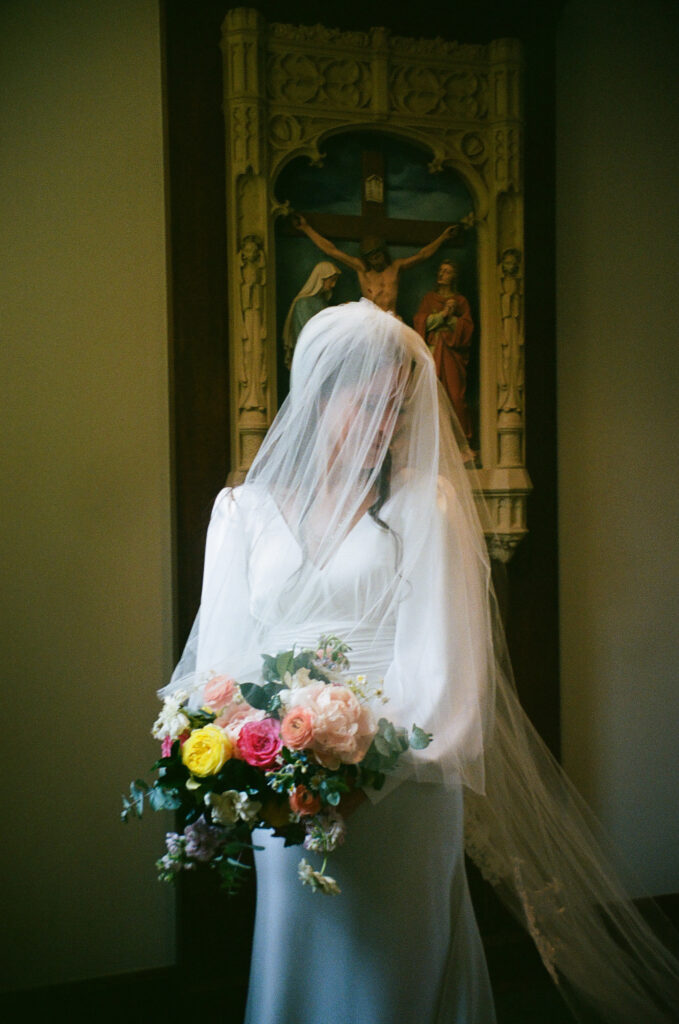
- Two-Tier: Two-Tier veils have two layers, one to cover your face as you walk down the aisle (called a blusher) and another to cover your back. If one of your dream moments is to have your dad or future husband uncover your face at the altar, this is the veil for you!
- Mantilla: Mantillas are often found in hispanic cultures, framing the face with lace. They’re usually worn a few inches from the hairline, and can vary in being covered in chantilly lace to just lined with French lace.
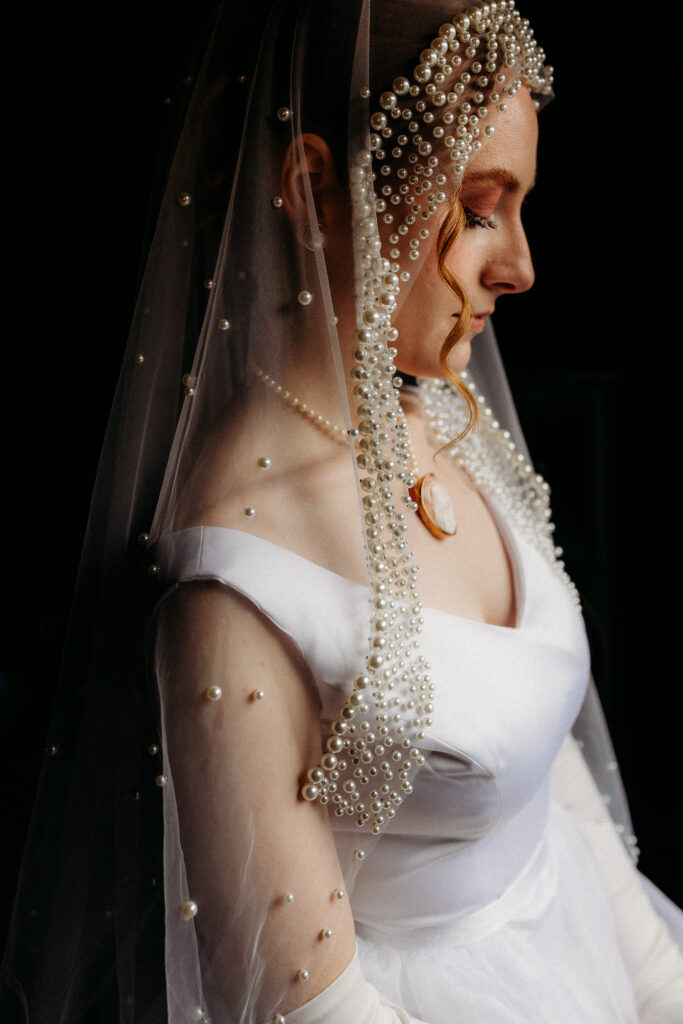
- Pearl: Pearl laces are becoming very common for a fun modern twist on the classic tulle veil. Cascading pearls are sewn into the veil for an extra added elegance and character.
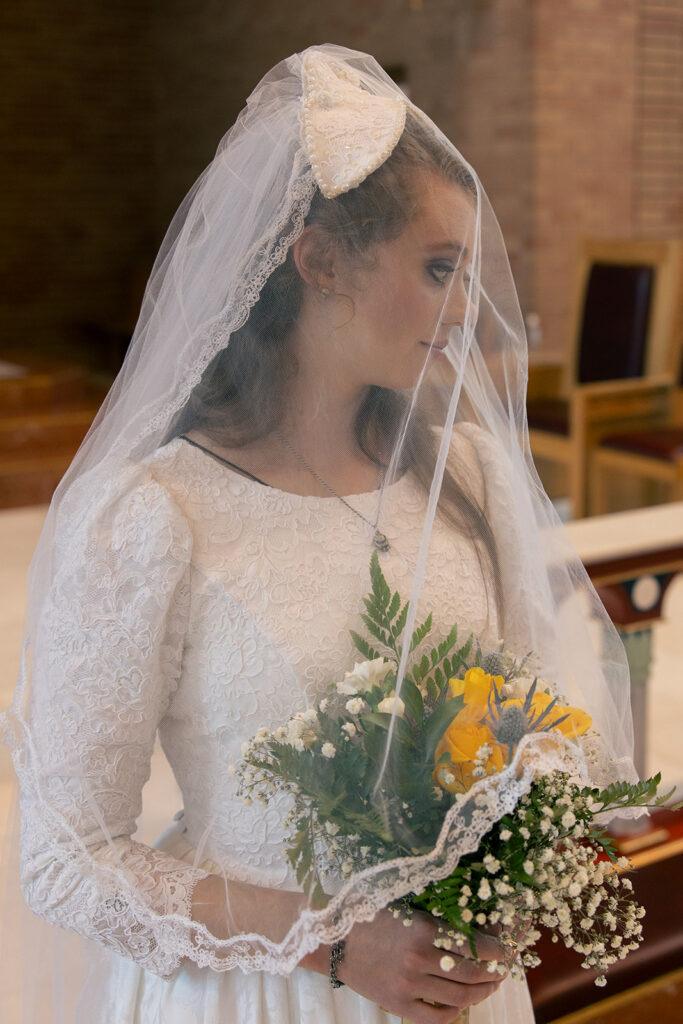
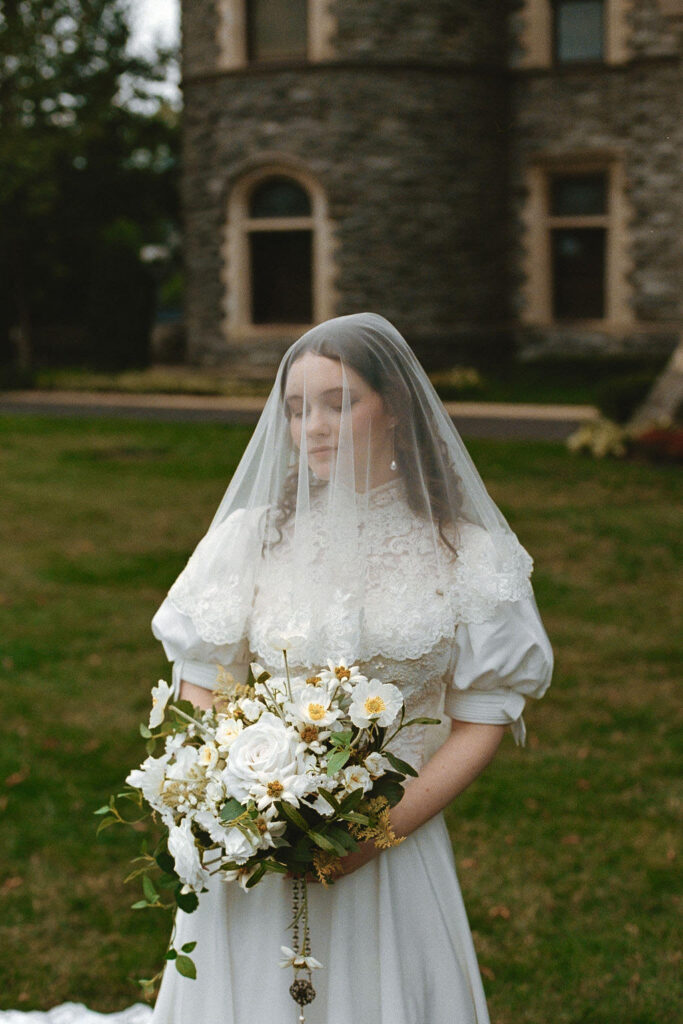
- Classic Tulle: The classic tulle is the most versatile of veils. It will match pretty much any dress and can be found in any length and style, making it the go-to choice for brides.
(from left to right) Photos by Alexis Dean Photography, Laudare Photography, and Beauty of the Soul Studio
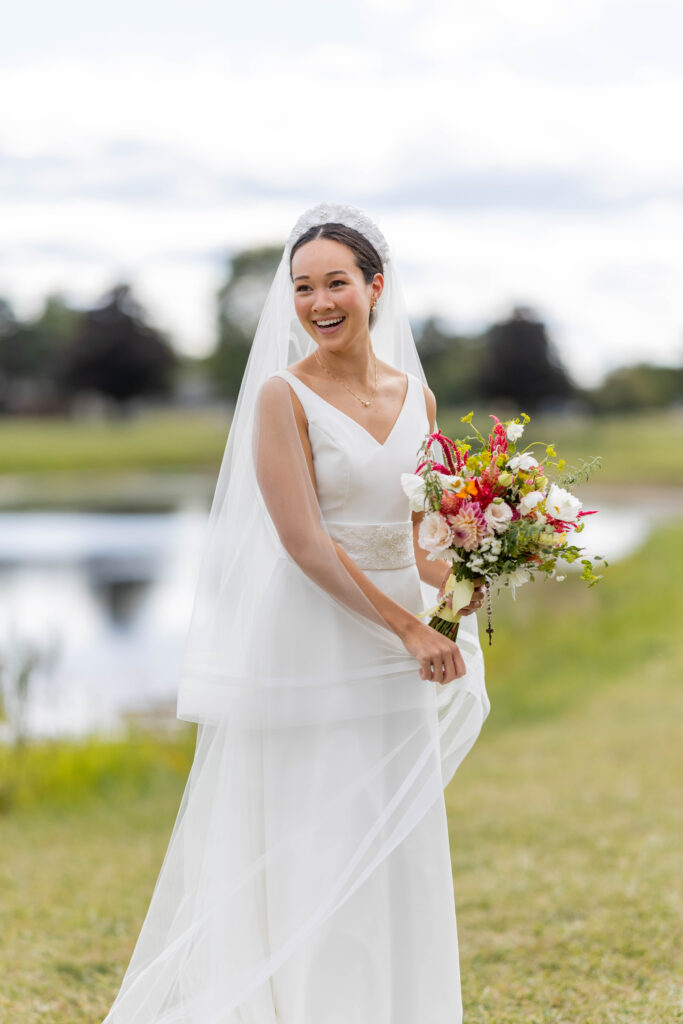
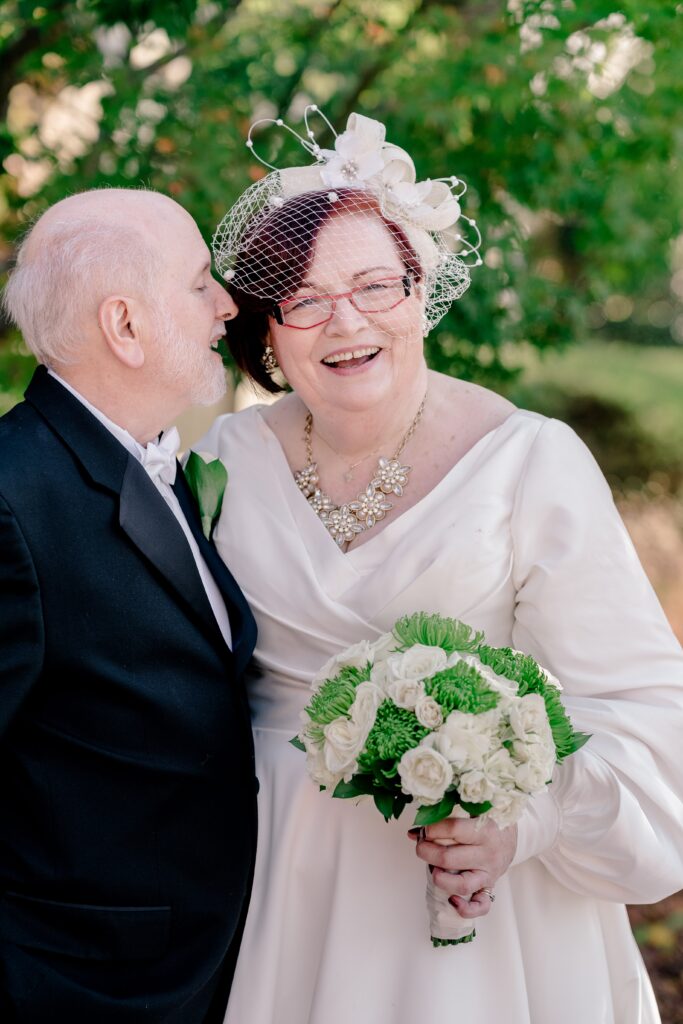
What Comes First: The Veil or The Dress?
Now for the age-old question: should I shop for my veil first or my dress? And the answer is… whichever you care about more!
If you’ve been dreaming of a specific mantilla, you might want to grab that first to make sure the lace matches your dress. If you have a specific dress in mind, then confirm that first and then match the veil to the dress. It’s completely up to your own style and priorities. If you find a beautiful satin ballgown, the pearl veil might feel like the perfect fit! But if you fall in love with an all lace dress, maybe a tulle veil feels better.
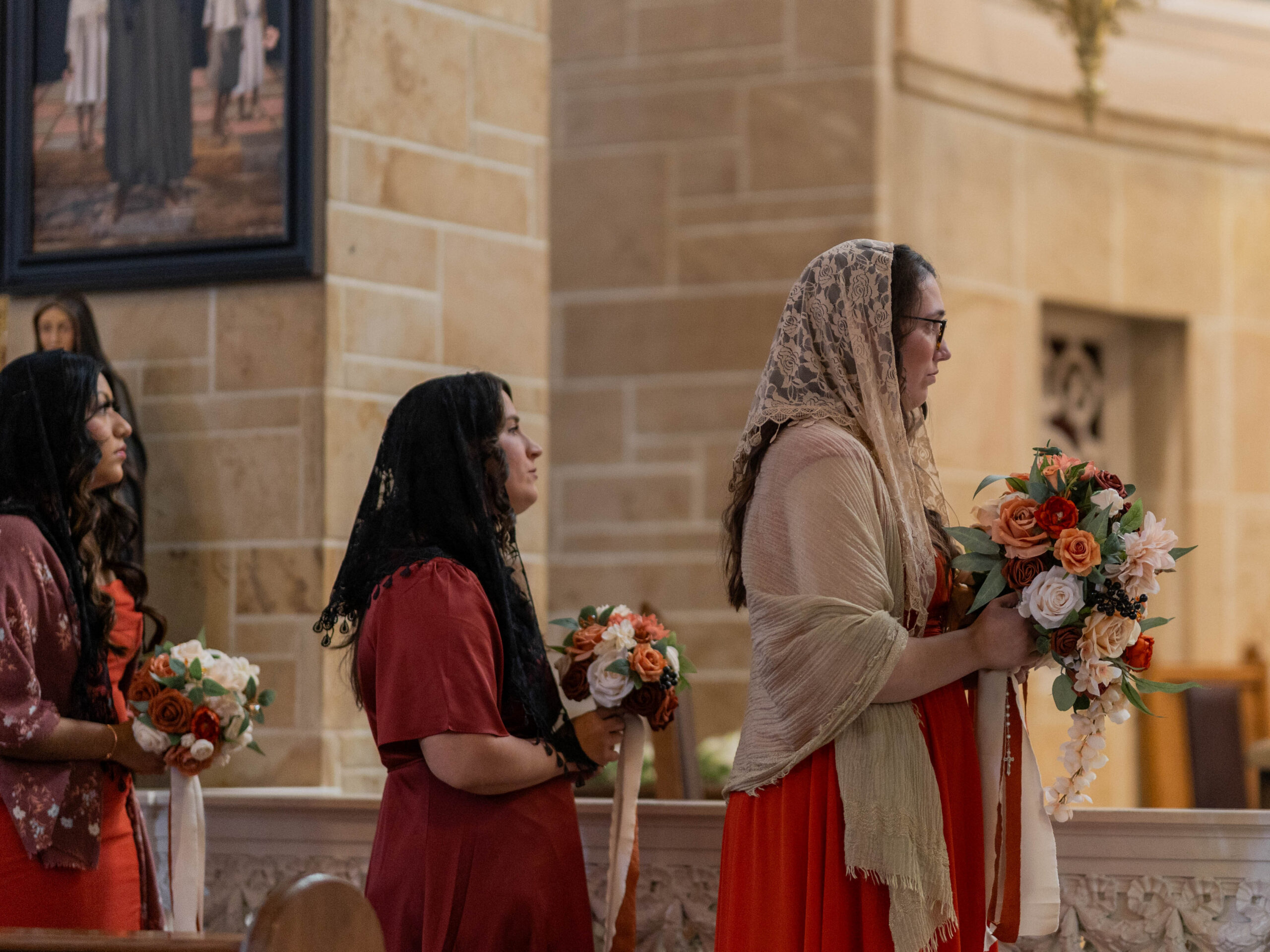
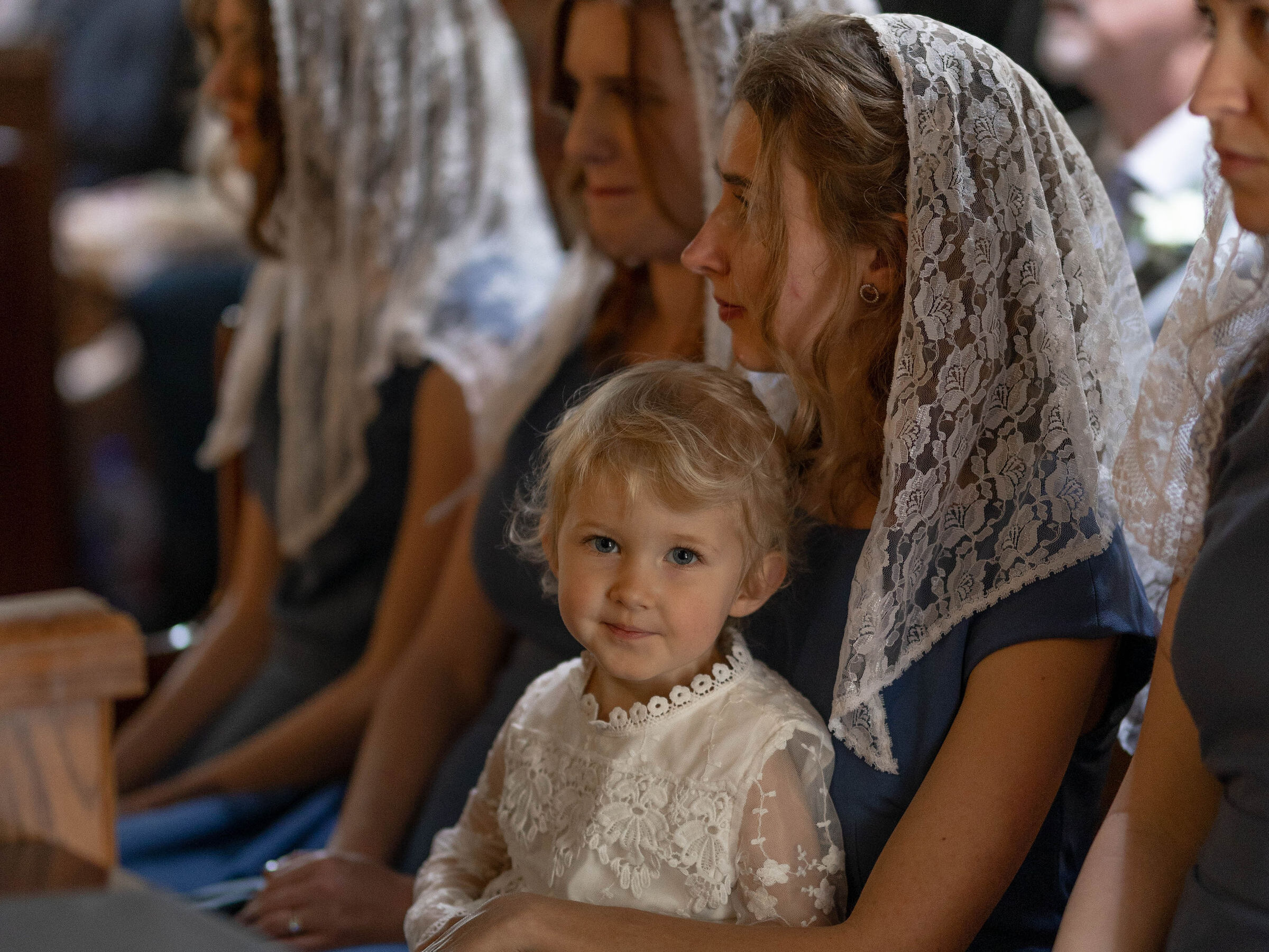
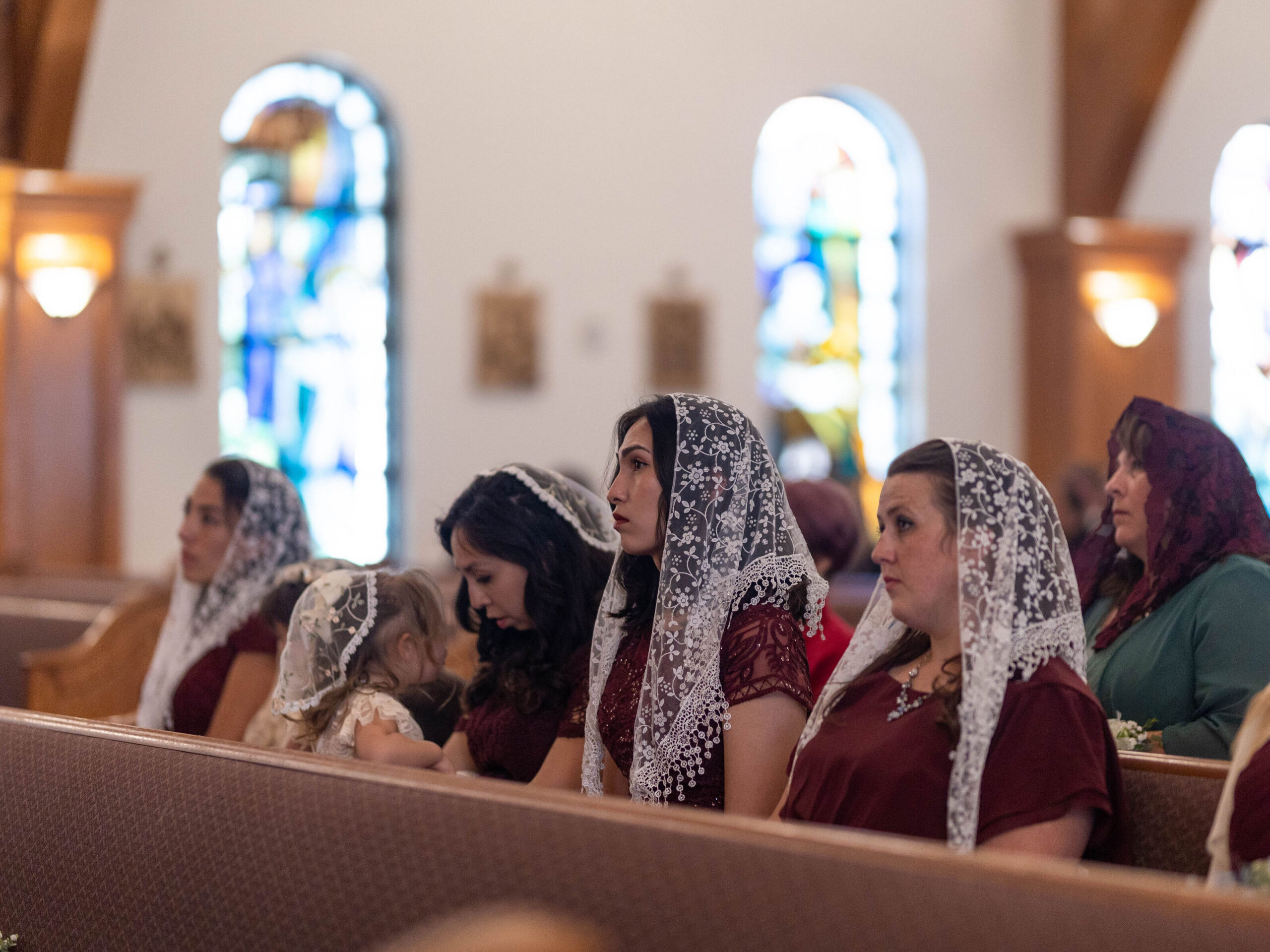
Photos by Laudare Photography
Bonus Idea: Mass Veils for Your Bridesmaids
If wearing a Mass veil is a big part of your prayer and the prayer of your bridal party, don’t be afraid to add veils to your bridesmaid gifts! You can get them a specific color to match their dresses, or personalize them with their confirmation name or favorite depiction of Mary. This can be a beautiful way to welcome your bridesmaids into the sacredness of the sacrament they are witnessing, and help them enter deeper into the reverence of the moment.
(from left to right) Photos by Framing Fairytales, Hidden Lives Photography, and Wynkoop Photography
In Closing
No matter what you choose, wearing a veil on your wedding day is a once-in-a-lifetime experience. Make sure you feel comfortable with your decision and discern it just as you would your dress. One thing is for certain—you’ll look beautiful either way!
Looking for someone or something specifc?

Search By Category
Photographers • Videographers • Photo + Video team • Florists • Wedding Coordinators • PHysical Products • DJs/Musicians • Rentals • Stationery • Marriage Preparation Resources • Venues
Search By Region
Vendors are sorted by their home state but many offer to travel. Expand your search by searching regions.

West Coast • Rocky Mountain • Southwest • Great Plains • Midwest • East South Central • South • East Coast • New England